
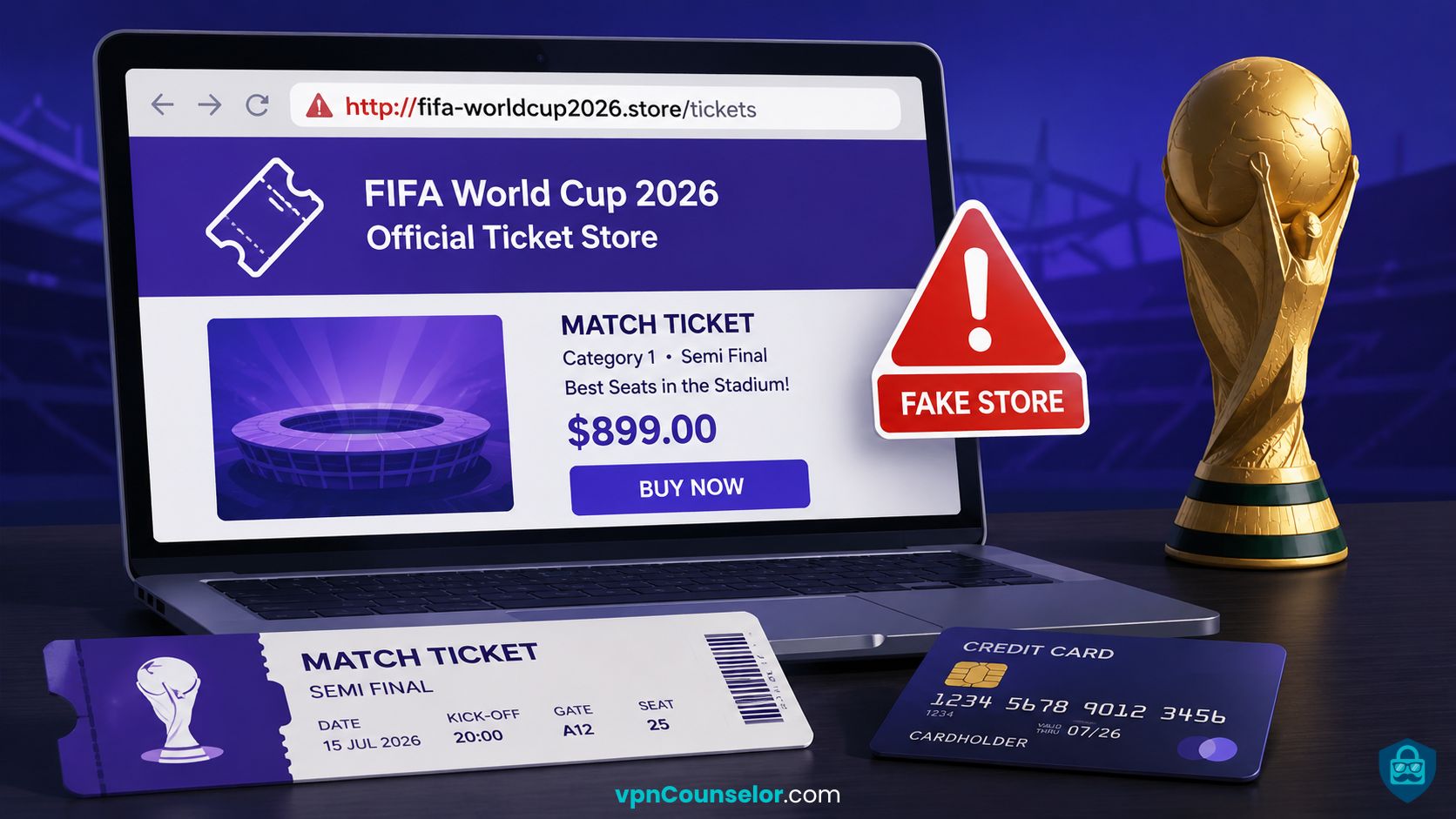
Cybersecurity experts warn that fake ticket websites and online scams are targeting fans ahead of World Cup 2026.Fans Are Being Targeted Before Kick-Off
With the FIFA World Cup 2026 only days away, cybersecurity researchers are warning fans about a growing wave of online scams. Fake FIFA websites, fraudulent ticket pages, and unofficial streaming platforms are already appearing online. Many of these sites are designed to steal passwords, payment details, and personal information from people searching for tickets, match schedules, or ways to watch the tournament.
Researchers have also reported thousands of World Cup-related domains and social media accounts created to impersonate legitimate organizations. Cybercriminals are taking advantage of the excitement surrounding the tournament to trick fans into visiting fake websites and sharing sensitive information.
Fake Ticket Websites and Financial Scams
One of the biggest threats involves fake ticket stores and fraudulent World Cup websites. These platforms often look professional and may use official logos, branding, and promotional offers to appear trustworthy. In many cases, victims pay for tickets that do not exist and never receive what they purchased.
Beyond financial losses, some scam websites are designed to collect personal information, login credentials, and payment card details. Security experts warn that criminals frequently use urgency tactics, such as limited-time offers or claims of low ticket availability, to pressure fans into making quick decisions.
How to Stay Safe
Before buying tickets, downloading apps, or watching matches online, keep these safety tips in mind:
- Use only official FIFA, broadcaster, and ticketing websites.
- Check the website address carefully before entering any personal information.
- Make sure the website uses HTTPS (look for the padlock icon in your browser).
- Be cautious of offers, discounts, or tickets that seem too good to be true.
- Avoid downloading apps, files, or streaming software from unknown sources.
- Enable two-factor authentication (2FA) on important accounts whenever possible.
- Use strong, unique passwords for your email, banking, and sports-related accounts.
- Never click links received from unknown emails, messages, or social media accounts.
- When using public Wi-Fi, avoid accessing sensitive accounts or making payments.
- Using a reliable VPN can help protect your data and add an extra layer of security while browsing, traveling or streaming the tournament online.